


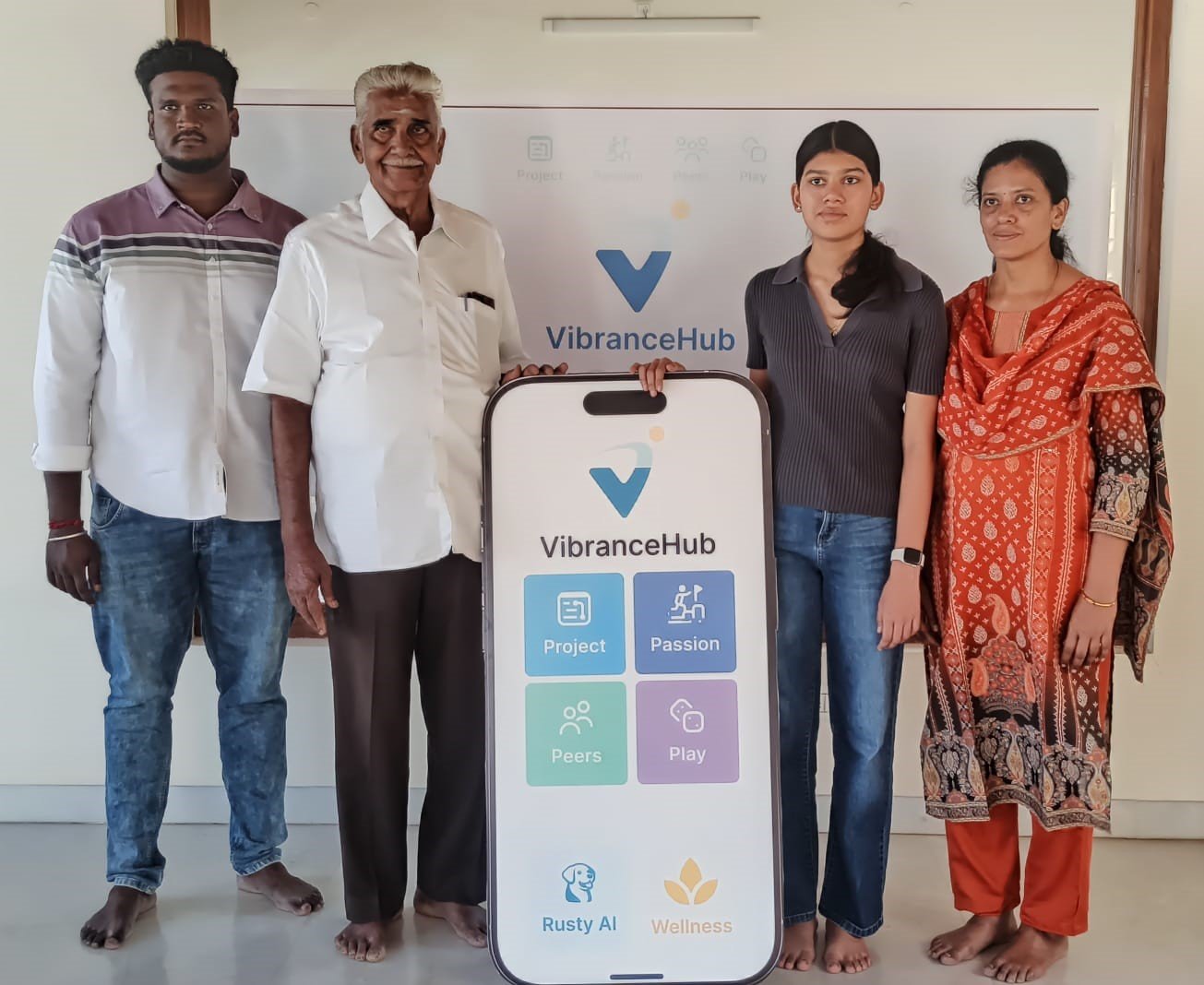
COIMBATORE — Rithanya Sivaram, a Class 12 student at The Indian Public School, has launched Vibrance Hub, a groundbreaking platform that integrates project-based learning with yoga-based wellbeing. This initiative aims to fill a critical gap in India’s educational landscape as students prepare for an AI-driven future.
By blending creativity with technology, Vibrance Hub provides students an environment that fosters peer collaboration and personal growth. “In the age of AI, information is commoditized. What matters now is what you can make, how you think, and whether you can sustain creative work over time,” Sivaram explains. She emphasizes the importance of practices that help transform interest into sustained output.
Grounded in the Massachusetts Institute of Technology’s (MIT) Lifelong Kindergarten framework—Passion, Projects, Peers, and Play—Vibrance Hub recognizes that maker education extends beyond mere construction. It emphasizes vital skills such as computational thinking, resilience through iteration, and collaborative abilities—traits that artificial intelligence cannot fully replicate.
Children’s natural inclination to tackle problems fearlessly diminishes over time due to years of standardized testing that often prioritize correct answers over creativity. This systematic approach causes a decline in confidence, leading young minds to shy away from experimental learning.
Vibrance Hub seeks to reverse this trend, aiming to reignite the creativity that many students feel is lost. The platform symbolizes a noteworthy return to India’s rich educational heritage. Historically, the gurukul system thrived on experiential learning, allowing students to gain knowledge through hands-on exploration—learning metallurgy by forging and astronomy through observation.
The launch of Vibrance Hub timely coincides with the provisions of the National Education Policy (NEP) 2020, which calls for a revival of maker-centric education. The policy recognizes that future prosperity hinges on innovation and creativity, not merely on retaining information.
Moreover, the Atal Innovation Mission (AIM), established by NITI Aayog in 2016, stands as a robust framework aligning with NEP 2020. AIM aims to operationalize and promote hands-on learning through substantial infrastructural support across the nation. This initiative explicitly addresses the necessity of fostering creativity and innovation in school curriculums, further confirming Vibrance Hub’s relevance in the current educational discourse.
To ensure widespread access and participation, Vibrance Hub plans to host workshops, collaborative challenges, and community projects. Each project will not only engage students in practical applications of their knowledge but also emphasize good mental health and wellbeing through integrated yoga sessions. This holistic approach represents a shift towards developing well-rounded individuals who can contribute constructively to society.
As education transitions to encompass more experiential and integrated forms of learning, Vibrance Hub stands out as an innovative blueprint for future initiatives. It embodies the spirit of inquiry and resilience that Indian education once cherished, helping students build a robust foundation as they navigate the complexities of an AI-dominated landscape.