


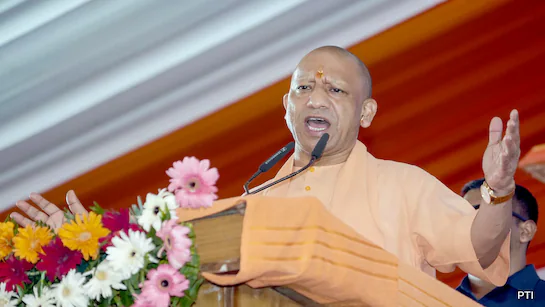
Uttar Pradesh Chief Minister Yogi Adityanath reiterated his convictions on Tuesday, asserting that ‘political Islam’ has played a significant role in undermining Hindu faith throughout history. Speaking at an event called ‘Vichar-Parivar Kutumb Sneh Milan’, held in Gorakhpur, he highlighted that historical discussions generally focus on colonialism but neglect this critical ideological challenge.
“Our ancestors fought against political Islam just as ferociously as they battled British and French colonial powers. Yet, this aspect of our history remains largely forgotten,” Adityanath stated, invoking the names of revered Hindu warriors such as Chhatrapati Shivaji Maharaj, Guru Gobind Singh, Maharana Pratap, and Maharana Sanga.
The Chief Minister addressed a gathering celebrating the centenary of the Rashtriya Swayamsevak Sangh (RSS). He commended the organization for its unwavering commitment towards the construction of the Ram Temple in Ayodhya, a project entwined with the Hindu community’s sentiments.
“This moment in history marks how our ancestors’ courage shaped a legacy,” he elaborated, emphasizing the lack of recognition for those who struggled against ‘political Islam’. According to him, awareness of the struggles made during those times offers a comprehensive understanding of the resilience of Sanatan Dharma.
Further discussing the ramifications of ‘political Islam’, Adityanath criticized contemporary political opponents for failing to acknowledge this ideology. He remarked, “Our forebears took up arms not only against colonial forces but also against political Islam, which poses an ideological threat. While we speak of British colonialism, we need to delve deeper into how political Islam has historically undermined our faith.”
During the event, he lauded the RSS for enduring significant hardships. Adityanath reflected on how, despite skepticism from members of political parties like the Samajwadi Party and the Congress regarding the construction of the Ram Temple, RSS volunteers remained resolute. “Even as they faced violence and police action, these dedicated volunteers worked tirelessly until the temple emerged as a symbolic monument of faith,” he stated.
Additionally, Adityanath spotlighted ongoing community concerns related to ‘political Islam’, alleging that its influence persists in various guises. He urged the gathering to remain vigilant, stating, “The struggle against this ideological challenge is far from over.”
He informed attendees about Uttar Pradesh’s recent legislation banning the sale of Halal-certified products, linking the profits from such sales to issues like conversion and alleged acts of love jihad and terrorism.
In celebrating the RSS centenary, Adityanath outlined a vision based on five core transformations: fostering social harmony, encouraging family values, promoting environmental protection, advocating for indigenous goods, and enhancing civic responsibility. He stressed these pillars are essential for realizing a ‘Viksit Bharat’ or developed India.
“A developed nation requires societal leadership, followed by governmental action,” Adityanath concluded, urging collective participation in nation-building efforts.
As political discourse in India continues to evolve, Adityanath’s comments affirm a growing emphasis on historical context while navigating complex ideological landscapes.