


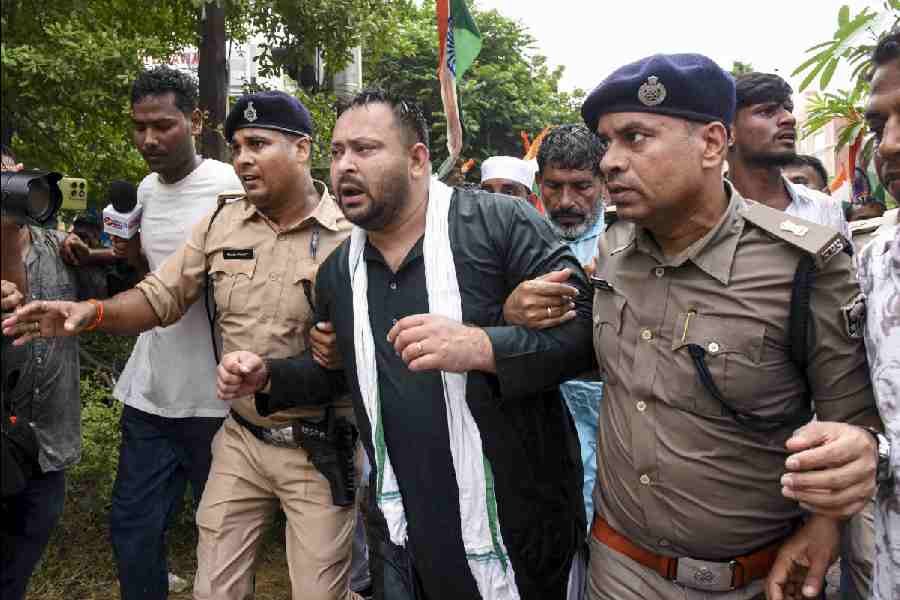
Tejashwi Yadav, the Leader of the Opposition in Bihar, faced detention in Patna on Wednesday as he led a protest march against recent police actions during the NEET examination paper leak protests. The march began at JP Golambar and aimed to reach Lok Bhavan, underscoring widespread frustration over recurring exam paper leaks in the state.
Yadav’s detention occurred near the Income Tax office, as confirmed by Senior Superintendent of Police, Kartikeya K Sharma. Eyewitnesses reported that police utilized water cannons to disperse the crowd, which included a number of RJD supporters attempting to breach barricades.
During his arrest, Yadav criticized the state government, stating, “The government is pushing the future of students into darkness. Exam papers are getting leaked frequently.” His comments reflect broader concerns among students and parents regarding the integrity of the examination system in Bihar.
This incident represents a significant moment in ongoing protests as students have increasingly demanded reforms in the examination procedures. Protesters argue that the government’s response to their demands has been excessively forceful. “It is essential to understand the emotions of Gen Z. The government utilized AK-47 rifles against protesting students in Bihar and deployed pellet guns and nail-embedded batons in Delhi when all they sought was a fair and transparent examination process,” Yadav stated, highlighting the urgency of their cause.
The unrest surrounding the NEET examinations is part of a larger pattern of student activism in India, where many young people express their discontent with systemic issues within the education sector. Yadav’s actions resonate with a generation that feels its future is at stake amid allegations of corruption and negligence in handling examination policies.
Local analysis suggests that the ongoing protests may pressure the Bihar government to take immediate action on the increasing incidents of paper leaks. As the situation develops, students, activists, and political leaders will likely continue to voice their demands for transparency and accountability in the state’s education system. The outcome of these events could have far-reaching implications for students across the region.